66

— The number of errors contained in an Air Force technical order instructing airmen on how to load nuclear weapons. “When this was reported through proper channels, the wing was told to submit 66…forms – the normal process for requesting changes to T.O.s…The T.O. was virtually unusable,” a review of the service’s nuclear-weapons prowess reports. “A major issue is that the people doing hands-on work are expected to perform without error, and the consequences for error, even one that causes no damage or mission failure, can be severe. Yet, these same people are handed a T.O. with 66 errors and told they will have to do the work to correct the deficiencies that slip through the review system.” The report, here, praised the airmen doing the hands-on work, but noted several problems with their commanders. The Air Force has been struggling for six years to ensure it handles nuclear weapons safely following some well-publicized snafus.


Wounded in Action

A pair of airmen perform a security check around a disabled C-130 at Forward Operating Base Shank, Logar Province, June 6.

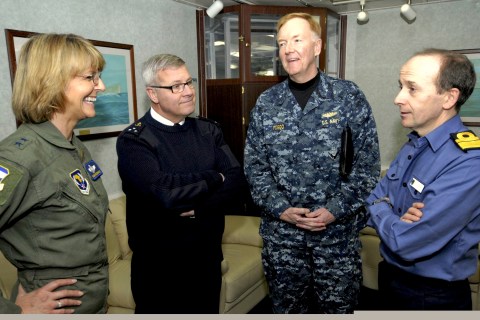
I have been made aware, from the chain of command and from direct feedback from the Fleet, that we are spending too much time performing administrative tasks, or perhaps completing duplicative or competing requirements by ISICs [Immediate Superiors in Command] or others, which keep us from being effective -- that prevent us from keeping `Warfighting First.' To help address this imbalance, you will need to stand up a Navy-wide working group.
— Admiral Jonathan Greenert, the chief of naval operations, in a recent letter, here, to the head of the Navy’s nuclear propulsion program. h/t CDR Salamander
Battleland Battleland

Hey Taxpayers: $FOUO!

Amid a torrent of stories about secrecy, or the lack thereof, surrounding the National Security Agency’s tracing the electronic communications of U.S. citizens, you’re forgiven if you missed Friday’s report from the Pentagon

$17,500

— How much the Department of Veterans Affairs paid for a boat, motor and trailer – and to ship them to Molokai, Hawaii – for a U.S. military veteran under the VA's Independent Living program. "The case record indicates that the veteran was provided a boat to `significantly improve independent living and psychosocial functioning,'" the Government Accountability Office reported Friday, here. "At the time of assessment, the VRC [Vocational Rehabilitation Counselor] noted that the veteran, who suffered from PTSD, was socially isolated but had an interest in fishing. However, the veteran’s old boat `rotted away,' and the cost for purchasing a new one was high. The VRC noted in the case file that because the veteran received a new boat, he was less depressed and his relationships with family and friends improved." Molokai, here, seems like a pretty nice place to have a boat. No word on whether or not he had served in the Navy.
  1. 1
  2. ...
  3. 127
  4. 128
  5. 129
  6. ...
  7. 225