
Battleland

A Military-Justice Immelman?

U.S. Army Air Corps

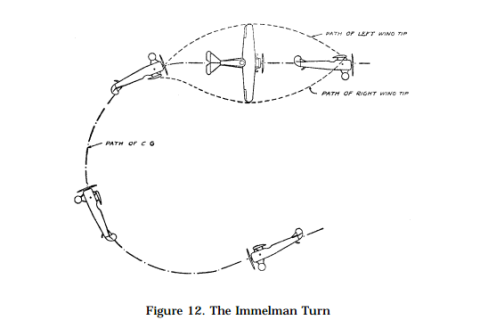
In flying, an Immelman is a kind of looping turn, popular during World War I, that sends an aircraft in the opposite direction.

Did the U.S. Air Force just pull an Immelman in the sexual-misconduct case of Lieut. Colonel James Wilkerson, a long-time F-16 pilot and formerly the 31st Fighter Wing’s inspector general – the chief Goody Two-Shoes — at Aviano air base, Italy?

It’s a case that’s stirred up controversy from that Italian base, 50 miles northeast of Venice, all the way to the U.S. Senate.

Here are the facts of the case:

Lt. Col. James Wilkerson

USAF

Lt. Col. James Wilkerson

Last March 23, an evening of music and drinks at a base club ended with a gathering at the home of Wilkerson and his wife, Beth. Another woman, a 49-year-old American physician’s assistant, who had met the Wilkersons that night for the first time, stayed behind after the other guests left.

She testified that she fell asleep in a guestroom and awoke after Wilkerson began sexually assaulting her. She said the incident ended when Wilkerson’s wife walked into the room and ordered the guest to leave. Both Wilkersons said James never left his bed that night. Beth said she got up about 3 a.m. and told the woman to go home.

A week-long court martial took place last fall. Chief prosecutor Colonel Don Christensen told the jury that the accuser had “zero motivation” to lie, Stars and Stripes, the independent military newspaper, reported. “To perjure herself and go through this process, destroy this man, destroy his wife, destroy his son — you’d have to believe [she] is pure evil, a spawn of Satan,” Christensen said.

Defense attorney Frank Spinner called the case against his client an “imagined sexual assault.” There was no physical evidence in the case; Wilkerson did not testify on his own behalf. As the alleged victim of a sexual assault, the accuser’s name is not being published.

An all-male jury – four colonels and one lieutenant colonel – found Wilkerson guilty Nov. 2 of aggravated sexual assault, abusive sexual contact and three counts of conduct unbecoming an officer and gentleman. They ordered him dismissed from the service and imprisoned for a year.

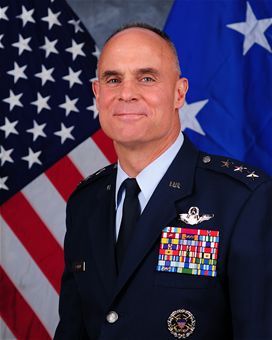
On Feb. 26, Air Force Lieut. General Craig Franklin reversed Wilkerson’s conviction. As the so-called “convening authority” in the case, he decided that the case should go to court martial, he chose the jury – and he has the power to overrule a jury’s finding. After reviewing all the evidence in the case – including some kept from the jury – Franklin threw out the conviction. He “concluded that the entire body of evidence was insufficient to meet the burden of proof beyond a reasonable doubt,” the Air Force said in a statement. Wilkerson was promptly freed from the U.S. Consolidated Naval Brig in Charleston, S.C.

The reversal has generated anger from three U.S. senators – all female. “This is a travesty of justice,” Democratic Sens. Barbara Boxer of California and Jeanne Shaheen of New Hampshire wrote to Defense Secretary Chuck Hagel on Monday. “We ask that you immediately provide us detailed information regarding the basis for General Franklin’s decision, including whether you have the authority to overturn the dismissal of the case. In addition, we urge you, in the strongest possible terms, to take immediate steps to restrict Convening Authorities from unilaterally dismissing military court decisions.”

On Tuesday, Senator Claire McCaskill, D-Mo., took the opportunity to grill General James Mattis over the case, even though as a Marine — and the head of U.S. Central Command — he has no jurisdiction over it.
General%20Franklin%208x10

USAF

Lt. Gen. Craig Franklin

“With a stroke of a pen last week, a general dismissed those charges against [Wilkerson], a general with no legal training, a general that had not sat it the courtroom,” she told Mattis. “I ask you, General Mattis, isn’t it time — as we understand that the majority of homeless women in this country are veterans and that the majority of them had some form of sexual assault — that we look at the UCMJ [Uniform Code of Military Justice] and decide that we need to have something other than the arbitrary decision of one general, without any other supervising authority, any other procedure that is necessary, to actually overturn the very difficult decision that the jury came to?”

Mattis, who was there to discuss the war in Afghanistan and his 2014 budget, punted – but offered a defense of the UCMJ. “Senator, I do not know the specifics of this case, and I’ve always been reluctant to comment on something where I don’t know it,” Mattis responded. “But let me assure you, senator, that the Supreme Court has upheld what Congress has passed for the UCMJ, recognizing the unique aspects of the military. And in this case, there are more rights provided to defendants in the military, because no court system is more subject to being characterized as a kangaroo court than one where military officers who are in command also initiate it.”

Spinner, Wilkerson’s attorney, tells Battleland that McCaskill’s criticism is an “ignorant and prejudicial attack that is governed more by political correctness than truth.” Spinner says amid the outcry generated by the sexual-assault scandal at Lackland Air Force Base and elsewhere, “many lawyers in all the branches of the armed forces are being subjected to unlawful command influence and congressional pressure to take these cases to court, regardless of the questionable merits of the claims some women are making.”

Meanwhile, back at Tuesday’s hearing, McCaskill plainly realized that Mattis couldn’t help. For that, she acknowledged she’d have to speak with General Mark Welsh, the Air Force chief of staff. “General Welsh is going to be hearing from me about this particular general,” she said of Franklin. “I think it’s also interesting that both of these people are fighter pilots. They both have served together. And that adds more appearance of impropriety to this particular decision. And I’m going to ask General Welsh some very difficult questions.”

7 comments
ikennen
ikennen

Lt Gen Franklin had to have known that when he threw out the findings of guilt in this case that he was essentially ending his own career. For that reason alone, it seems likely that he is being honest when he says that he simply felt there was not proof beyond reasonable doubt - essentially he believed the court-martial members ("jury") should have found reasonable doubt, but didn't, and he couldn't let their decision stand. That, whether his perception concerning the sufficiency of the evidence was accurate or not, was a courageous thing to do. Further, it was clearly in his authority to do. Congress gave him - and all convening authorities - the ability to review the decisions of court-martial panels precisely because of the danger that those "juries" might return indefensible verdicts. The reason military "juries" are susceptible to making the wrong call is multi-factorial. First, unlike most civilian jurisdictions, military panels do not need to be unanimous to return a guilty verdict - a 2/3 vote for guilty is sufficient, even on felony-level cases such as this. Second, unlike most civilian juries, military panels are comprised entirely of "company men" - career Soldiers, Sailors, Marines, or Airmen who are more likely than their civilian jury counterparts to believe the government is reliable. It is therefore arguable that military courts-martial panels might not give full weight to the principle that the accused should be presumed innocent. This bias for the prosecution is compounded when the case involves a hot-topic offense such as sexual assault. For years, in an effort to "change the culture" believed to be permitting and covering up sexual assault, each service has been drilling training into the entire force that victims must be protected and believed while offenders must be held accountable. That mantra has been drilled even more heavily into senior officers - the very sort of officers typically selected to sit as court-martial members. For senior officers, being seen as "tough on sexual assault" is a prerequisite to command. Basically, the military has - maybe unintentionally - biased court-martial panels before they ever step into the courtroom. Military members are adept at following orders and accomplishing the mission. Therefore, when they are told day in and day out (and arguably as a condition of their employment) that they are expected to believe and support alleged victims and hold alleged offenders accountable, they do so. Further, they do so regardless of how many times the military judge tells them to presume the accused innocent and to hold the government to the burden of proof beyond reasonable doubt. Given all of the above, it is entirely possible that Lt Gen Franklin did nothing wrong and instead made a courageous decision against his own self-interest to overturn a conviction where there was reasonable doubt but the jury failed to find it. I distinguish "reasonable doubt" from "innocence." Lt Gen Franklin did the right thing by overturning the conviction if he thought there was reasonable doubt, regardless of whether he believed the accused actually committed the alleged offense. After all, he was acting within a system of law, not a system of justice.

mhungerman
mhungerman like.author.displayName 1 Like

Until crap like this dismissal stops, neither will the military sexual assaults.  I hope General Franklin had no designs on a fourth star, because that's never happening now.  He'll have one of those quiet Senate holds put on him that no one talks about.

famulla5
famulla5

There are, believe it or not, grounds for hoping that the sequester, stupid as it is, might open the way to ending our nation’s budget stalemate. Hope is in short supply right now, but the case for seeing a way out of the current mess rests on knowable facts and plausible assumptions. It starts with the significant number of Republicans in the Senate — possibly as many 20 — who think what’s going on is foolish and counterproductive. The White House is betting that enough GOP senators are prepared to make a deal along lines that President Obama has already put forward. Obama’s lieutenants argue that while Republicans are aware that the president is seeking new revenue through tax reform, many did not fully grasp the extent to which he has offered significant long-term spending cuts. These include reductions in Medicare and a willingness (to the consternation of many Democrats) to alter the index that determines Social Security increases. Obama has proposed $930 billion in cuts to get $580 billion in revenues. Senior administration officials note that Obama cannot stray too far from his existing offer, which was already a compromise, without losing the Democratic votes a deal would need. But his framework, they believe, could create a basis for negotiation with Republican senators such as Sen. Lindsey Graham, who dislike the deep automatic cuts in defense spending, and others, such as Sens. Susan Collins and Bob Corker, who dislike government-by-showdown. Graham was especially bullish, declaring that Obama’s outreach to Republicans — the president invited about a dozen GOP senators to dinner on Wednesday night — was “the most encouraging engagement on a big issue I’ve seen since the early years of his presidency.” If the Senate actually passed a bipartisan solution, it would still have to clear the House, requiring Speaker John Boehner to allow yet another bill get through with a large number of Democratic votes. But the sequester almost certainly marked the high point of solidarity among House Republicans. Letting it take hold was an easy concession for Boehner to make to more militant conservatives, and kept them from pushing toward government shutdowns or a politically and economically dangerous confrontation over the debt ceiling. Now comes the hard part for Boehner. Already, there is pushback from more moderate conservatives against the depth of the budget cuts that Rep. Paul Ryan will have to propose in in order to balance the budget in 10 years. At least some House Republicans may come to see a bipartisan Senate-passed deal as more attractive than the alternatives. I thank you Firozali A.Mulla DBA

famulla5
famulla5

NOTE THE LAST sentence State-level DREAM acts, which grant in-state college tuition for undocumented immigrants, could have a significantly positive impact on the economy, according to a new study. Estimating the economic effect of such so-called "tuition equity" legislation can be tricky, and most efforts to do so focus only on university-related spending and revenues. But when broader societal impacts are taken into account, these laws could be enormously beneficial to a state's economy, the report said.

More than a dozen states are considering proposals to grant in-state tuition for undocumented immigrants, joining the 13 that already have such a law in place.

The study, released last month, examined the potential impact of Maryland's tuition equity law, which passed by referendum last November. The authors of the report, Thomas Gindling and Marvin Mandell, who teach economics and public policy, respectively, at the University of Maryland, Baltimore County (UMBC), found that county, state and federal government each would stand to reap net economic benefits because of the law. For government at all levels, the total impact would be a net gain of $39.6 million. For society as a whole, they estimate a total economic benefit of $63.6 million.

As state lawmakers think about offering in-state tuition to undocumented immigrants, the UMBC study could offer a model for weighing long-term net benefits and costs.

When Maryland’s in-state tuition bill came before the General Assembly in 2011, the legislative research division estimated that the sum of direct revenues and expenses to state government would be negative and increasingly so over time. By 2016, the fiscal note predicted that the state would lose $3.5 million per year on undocumented immigrant students. “We thought that the fiscal note was limited in its scope,” Mandell said.

Relying on prior academic literature, Gindling and Mandell concluded that as more young undocumented immigrants attend college, they’re less likely to commit crimes and end up in jail, but more likely to increase their earnings and pay taxes. The authors’ calculations took into account increases in tuition revenue and spending, increases in property, income, sales and Medicare tax revenues as well as reductions in incarceration costs. I thank you Firozali A.Mulla DBA

famulla5
famulla5

State-level DREAM acts, which grant in-state college tuition for undocumented immigrants, could have a signficantly positive impact on the economy, according to a new study. Estimating the economic effect of such so-called "tuition equity" legislation can be tricky, and most efforts to do so focus only on university-related spending and revenues. But when broader societal impacts are taken into account, these laws could be enormously beneficial to a state's economy, the report said.

More than a dozen states are considering proposals to grant in-state tuition for undocumented immigrants, joining the 13 that already have such a law in place.

The study, released last month, examined the potential impact of Maryland's tuition equity law, which passed by referendum last November. The authors of the report, Thomas Gindling and Marvin Mandell, who teach economics and public policy, respectively, at the University of Maryland, Baltimore County (UMBC), found that county, state and federal government each would stand to reap net economic benefits because of the law. For government at all levels, the total impact would be a net gain of $39.6 million. For society as a whole, they estimate a total economic benefit of $63.6 million.

As state lawmakers think about offering in-state tuition to undocumented immigrants, the UMBC study could offer a model for weighing long-term net benefits and costs.

When Maryland’s in-state tuition bill came before the General Assembly in 2011, the legislative research division estimated that the sum of direct revenues and expenses to state government would be negative and increasingly so over time. By 2016, the fiscal note predicted that the state would lose $3.5 million per year on undocumented immigrant students. “We thought that the fiscal note was limited in its scope,” Mandell said.

Relying on prior academic literature, Gindling and Mandell concluded that as more young undocumented immigrants attend college, they’re less likely to commit crimes and end up in jail, but more likely to increase their earnings and pay taxes. The authors’ calculations took into account increases in tuition revenue and spending, increases in property, income, sales and Medicare tax revenues as well as reductions in incarceration costs.  I thank you Firozali A.Mulla DBA

famulla5
famulla5

NOTE THE LAST sentence State-level DREAM acts, which grant in-state college tuition for undocumented immigrants, could have a signficantly positive impact on the economy, according to a new study. Estimating the economic effect of such so-called "tuition equity" legislation can be tricky, and most efforts to do so focus only on university-related spending and revenues. But when broader societal impacts are taken into account, these laws could be enormously beneficial to a state's economy, the report said.

More than a dozen states are considering proposals to grant in-state tuition for undocumented immigrants, joining the 13 that already have such a law in place.

The study, released last month, examined the potential impact of Maryland's tuition equity law, which passed by referendum last November. The authors of the report, Thomas Gindling and Marvin Mandell, who teach economics and public policy, respectively, at the University of Maryland, Baltimore County (UMBC), found that county, state and federal government each would stand to reap net economic benefits because of the law. For government at all levels, the total impact would be a net gain of $39.6 million. For society as a whole, they estimate a total economic benefit of $63.6 million.

As state lawmakers think about offering in-state tuition to undocumented immigrants, the UMBC study could offer a model for weighing long-term net benefits and costs.

When Maryland’s in-state tuition bill came before the General Assembly in 2011, the legislative research division estimated that the sum of direct revenues and expenses to state government would be negative and increasingly so over time. By 2016, the fiscal note predicted that the state would lose $3.5 million per year on undocumented immigrant students. “We thought that the fiscal note was limited in its scope,” Mandell said.

Relying on prior academic literature, Gindling and Mandell concluded that as more young undocumented immigrants attend college, they’re less likely to commit crimes and end up in jail, but more likely to increase their earnings and pay taxes. The authors’ calculations took into account increases in tuition revenue and spending, increases in property, income, sales and Medicare tax revenues as well as reductions in incarceration costs.I thank you Firozali A.Mulla DBA

Serenity
Serenity like.author.displayName 1 Like

Mattis is wrong. Nothing about this case by itself is unique to the military. Giving commanders judicial powers only makes sense in cases that are about relatively minor disciplinary issues and things that arise from a military context. But this was no different from civilian cases with similar circumstances.

The lawmakers need to reform the so-called military "justice" system entirely. Not just for sexual assault, but for all criminal cases. Stop giving commanders such wide ranging powers. Have military law enforcement as investigators and the JAG corps as independent prosecutors. Analogous to how the civilian world work. The institutions already exist. They just need to be used properly. Mattis's answer is paradoxical here, since he seems to realize that it is a horrible idea to have the chain of command influence what should be an independent trial. Yet he defends it.